
| works | info | gallery | blog | News! |
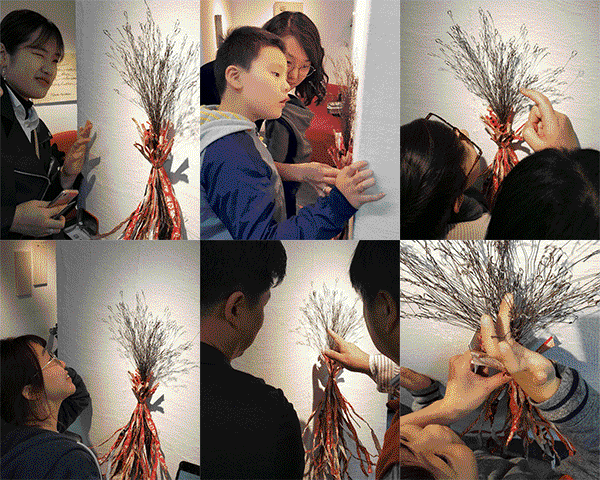
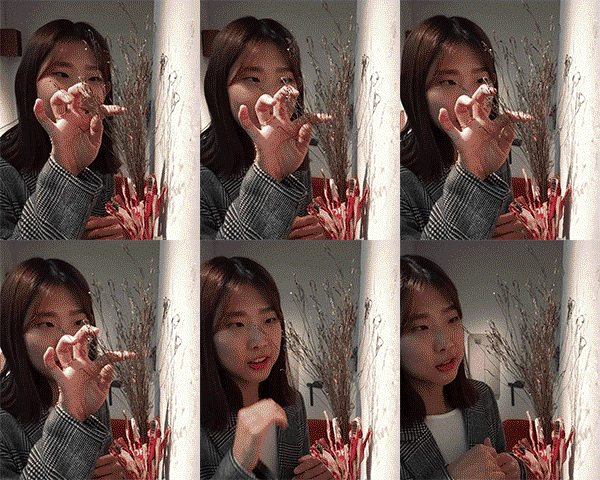
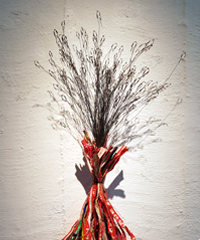
  who are we? 좋아은경, 폐철사, 2014 시금치, 열무 등 채소 한 단을 묶는 단끈 철사로 군중 다발을 만들었다. 철사 꼭대기에는 사람이 있고 그들은 손 안의 휴대전화를 내려다보고 있다. 단 한 사람만 빼고. 우리는 스마트폰에 24시간 로그인되어 언제 어디서든 커넥팅(connecting, 접속), 네트워킹(networking, 연결), 커뮤니케이팅(communicating, 송수신) 할 수 있다고 말한다. 연결의 시공간은 한도 끝도 없이 늘어난 것 같다. 그러나 직접 만나 눈을 마주치고 손을 맞잡는 일은 어떠한가. 우리는 우리 스스로 전자 신호를 주고받기만 하는 기다란 안테나가 된 것이 아닐까. "우리는 지금 길이 두갈래로 나뉘는 곳에 서있다. 우리가 오랫동안 여행해온 길은 놀라운 진보를 가능케 한 너무나도 편안하고 평탄한 고속도로였지만 그 끝에는 재앙이 기다리고 있다. 아직 가지 않은 다른 길은 지구의 보호라는 궁극적인 목적지에 도달할 수 있는 마지막이자 유일한 기회라 할 수 있다." —레이첼 카슨, 침묵의 봄, 1962 Abandoned wires into a bunch of people. There is a person at the top of each wire, and they are looking down at the cell phones in their hands. Except for one person. We say that we can connect, network, and communicate anytime, anywhere. The spatiotemporal scope of connection seems to have expanded endlessly. But what about face-to-face interaction? Have we not turned ourselves into long antennas that only send and receive electronic signals? "We stand now where two roads diverge. But unlike the roads in Robert Frost's familiar poem, they are not equally fair. The road we have long been traveling is deceptively easy, a smooth superhighway on which we progress with great speed, but at its end lies disaster. The other fork of the road — the one less traveled by — offers our last, our only chance to reach a destination that assures the preservation of the earth." —Rachel Carson, Silent Spring, 1962 ⦁ 특별한 관람법 How to participate in the artwork at the exhibition 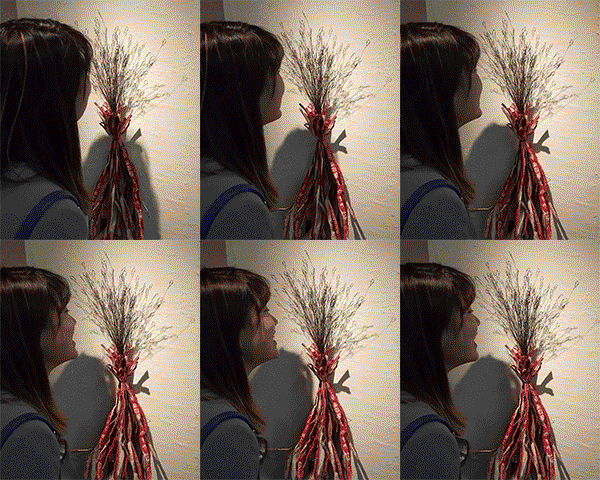
  ⦁ 철사 재료 Where waste wire materials come 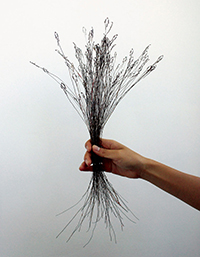 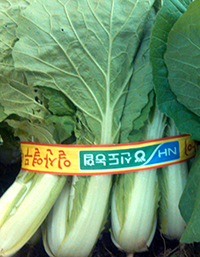 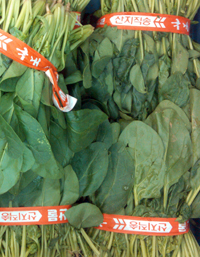  |